Method · Innovation workshop
BreakBias
Break the assumption before generating the answer.
A structured workshop for finding the beliefs that quietly narrow an innovation search, breaking their hold, and using the newly opened space to create services, businesses, and products.
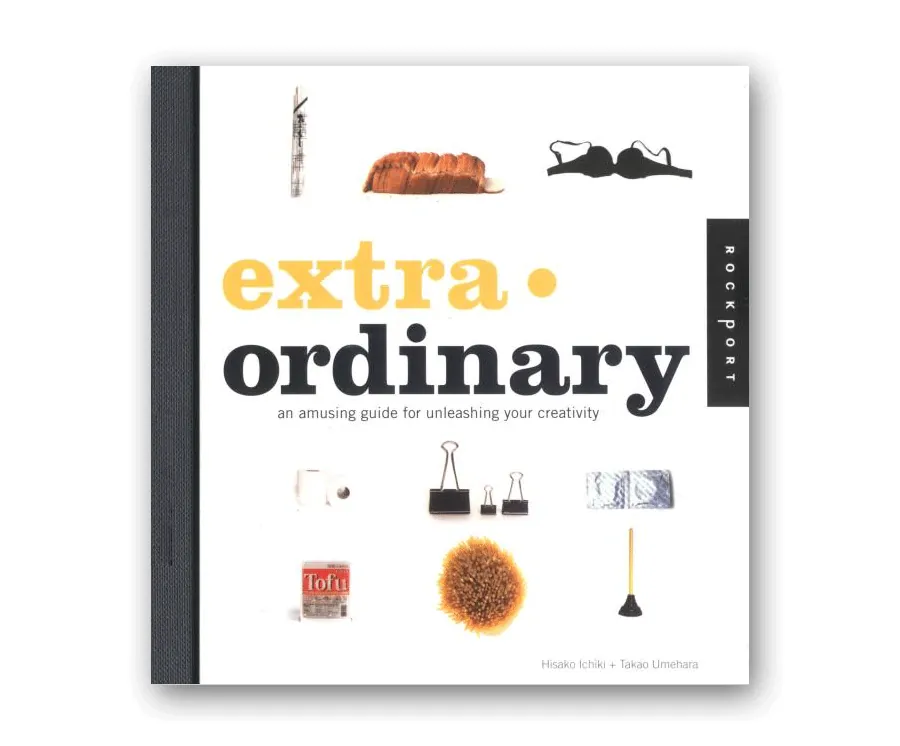
- The book that began the inquiry
- 2005
- The studio was established one year later
- 2006
- Default ideas a team must move beyond
- 3
01 · The book
Change what you notice.
Extra Ordinary: An Amusing Guide for Unleashing Your Creativity was co-authored by Hisako Ichiki and Takao Umehara in 2005, before the studio was established in 2006. It treated ordinary objects as prompts for seeing past their accepted purpose.
02 · The framework
Name the rule you have mistaken for reality.
The BreakBias framework developed that creative inquiry into a repeatable practice: identify the assumptions defining the current answer, separate useful constraints from inherited habits, and deliberately open alternative frames.
03 · The workshop
Build from the space the break creates.
The BreakBias Workshop applies the framework to innovation. Once a team can see what it assumed, it generates propositions from the altered frame and makes the strongest ones tangible enough to test and discuss.
What happens in a BreakBias Workshop
- Frame the fieldDefine the service, category, behaviour, or business question without treating the current model as fixed.
- Expose and break the biasSurface the rules underneath familiar ideas, then use structured provocations to reverse, remove, recombine, or relocate them.
- Turn the break into propositionsDevelop the opened possibilities into service, venture, and product concepts that a team can compare and prototype.
- Use it for
- Innovation strategy, new services, ventures, products, and organisational questions
- Format
- A facilitated workshop or the working method inside a longer engagement
- Participants
- Innovation teams have included Olympus, Hakuhodo, Ricoh, and Microsoft
The lineage is the point.
The book is not presented as a studio publication: it predates the company and was co-authored by the founder. It belongs here because the question it explored — how to escape the ordinary use already assigned to a thing — became a method the studio now offers in practice.
The organisations named above are workshop participants, not a client list.
Bring a question whose answers all feel familiar.
Tell us what your team is trying to rethink, and what keeps returning as the obvious answer. We reply from New York.